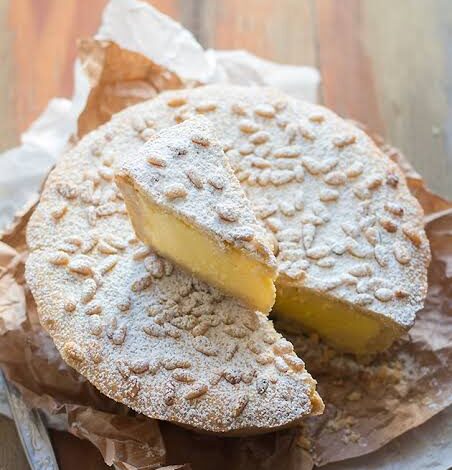
Torta della Nonna is a very famous and classic sweet treat that comes from the beautiful region of Tuscany in Italy. The name of this dessert translates to grandmothers cake in English which tells you exactly what kind of food this is. It is a traditional dessert that makes you feel warm and happy inside just like a loving grandmother would do when you visit her house. This cake is made of a sweet and crumbly pastry shell which is filled with a very smooth custard that has a lovely hint of fresh lemon and sweet vanilla. On the top of the cake there is a generous layer of crunchy pine nuts and a beautiful dusting of white powdered sugar that looks like fresh snow. When you take your first bite you will experience a perfect mix of textures because the soft and creamy custard balances so well with the crispy pastry crust. It is a rustic cake that does not look too fancy or complicated but it has a wonderful charm that makes everyone want a second slice. Learning to make this cake is like learning a piece of Italian history because families have been passing down this recipe for many generations.
People all over the world love this cake because it is incredibly comforting and has a flavor that is not too strong or overly sweet. It is the kind of dessert that feels very honest and simple because it does not rely on bright artificial colors or heavy frosting to taste good. The magic of this cake lies in the balance of simple everyday ingredients like flour sugar eggs and milk which come together to make something truly extraordinary. Many people love how the buttery pastry melts in your mouth while the creamy custard filling provides a rich and silky sensation that feels like luxury. The addition of pine nuts on top is a brilliant touch because they release their natural oils when baked which gives the cake a rich and slightly woody taste. This combination of textures and flavors is highly satisfying and makes it a crowd favorite at any dinner party or family gathering. Whether you are a young child enjoying a sweet treat or an adult who loves classic baking you will find something deeply comforting in a slice of this Italian classic.
This is the perfect cake to bake when you want to bring your family together or when you are feeling a little bit sad and need a creative activity to lift your spirits. Baking this cake fills your entire home with the most incredible smell of warm butter lemon zest and sweet vanilla which immediately makes any space feel cozy and safe. You should make this cake on a quiet Sunday afternoon when you have plenty of time to enjoy the process of rolling out the dough and stirring the warm custard. It is an ideal dessert for big family lunches or warm holiday dinners where everyone sits around a large wooden table talking and laughing for hours. Serving a slice of this cake with a warm cup of espresso or a light sweet wine is a wonderful way to end a meal and show your loved ones how much you care about them. The simple act of baking it is a form of love because it takes time and patience to create the beautiful layers which makes the final result feel like a real gift.
Even if you are someone who watches your fitness very closely or follows a healthy lifestyle this cake can still find a wonderful place in your routine. Making your own desserts at home is a fantastic way to take care of your body because you know exactly what is going into your food. You do not have to worry about strange chemicals preservatives or high fructose corn syrup that you often find in cakes bought from a supermarket. Instead you are using wholesome ingredients like fresh farm eggs real milk and organic lemons which contain good vitamins and simple energy. Eating a slice of this cake mindfully after a long week of hard workouts or busy workdays can be a wonderful reward that helps you feel balanced. It is important to remember that a healthy life is not just about eating vegetables and running on a treadmill but also about enjoying delicious moments of joy with food. Sharing a piece of this classic Italian tart with friends is good for your mental health and helps you maintain a positive relationship with your eating habits.
Ingredients You Will Need
To make this beautiful cake you will need to gather simple ingredients for two main parts. The first part is the sweet pastry dough which Italians call pasta frolla. The second part is the creamy custard filling which Italians call crema pasticcera. Here is exactly what you need to buy and measure before you start cooking.
For the Sweet Pastry Dough
-
All purpose flour: 350 grams (this is about 2 and three quarter cups)
-
Unsalted butter: 150 grams (this should be cold and cut into small cubes)
-
Granulated sugar: 130 grams (about two thirds of a cup)
-
Large eggs: 2 whole eggs (it is best if they are at room temperature)
-
Baking powder: 1 teaspoon (this helps the crust stay slightly soft and tender)
-
Lemon zest: 1 teaspoon (grated very finely from a fresh lemon)
-
Salt: a small pinch of fine salt to bring out the sweet flavors
For the Creamy Custard Filling
-
Whole milk: 500 milliliters (about 2 cups of rich milk)
-
Large egg yolks: 4 yolks (save the whites for another recipe like a healthy omelet)
-
Granulated sugar: 120 grams (about half a cup of sugar)
-
Cornstarch: 40 grams (about one third of a cup to help the custard thicken up)
-
Lemon peel: 1 large strip of peel (use a vegetable peeler to cut it but avoid the white bitter part)
-
Vanilla extract: 1 teaspoon (or you can use half of a real vanilla bean if you have one)
For the Topping and Assembly
-
Pine nuts: 50 grams (about one third of a cup of raw pine nuts)
-
Powdered sugar: 2 tablespoons (for dusting over the baked cake)
-
Water or milk: 1 tablespoon (to brush on top of the dough so the pine nuts stick well)
Step by Step Method
Making this cake is a wonderful and relaxing process. Do not worry if you have never made a tart before because these simple instructions will guide you through every single part of the journey. Take your time and enjoy the smells and textures as you bake.
Part 1: Making the Sweet Pastry Dough
-
Mix the dry ingredients: Take a large mixing bowl and add your all purpose flour, granulated sugar, baking powder, and a pinch of salt. Use a whisk to stir them together so everything is distributed evenly.
-
Add the cold butter: Drop the cold cubes of unsalted butter into the flour mixture. Using your fingertips, gently rub the butter into the flour. You want to work quickly so the heat from your hands does not melt the butter. Keep rubbing until the mixture looks like wet sand with some small pea sized lumps of butter remaining. This texture is what makes the crust flaky.
-
Add the flavor and eggs: Grate the fresh lemon zest directly into the bowl. Then, make a small well in the center of the flour mixture and crack the two whole eggs into it.
-
Bring the dough together: Use a fork to gently beat the eggs in the center. Gradually bring the surrounding flour mixture into the eggs. Once it starts to clump together, use your hands to press the mixture into a cohesive ball of dough. Do not knead the dough too much. You only want to mix it until it holds its shape. If you knead it like bread, the crust will become tough instead of crumbly.
-
Divide and chill: Split the dough into two pieces. One piece should be slightly larger, about two thirds of the dough, which will be the bottom crust. The other piece should be smaller, about one third of the dough, which will be the top lid. Wrap both pieces tightly in plastic wrap. Put them in the refrigerator to rest for at least 45 minutes. Chilling the dough lets the butter firm up again and relaxes the gluten so it is easy to roll out.
Part 2: Making the Creamy Custard Filling
-
Heat the milk: Pour the whole milk into a medium saucepan. Add the large strip of lemon peel and the vanilla extract. Place the saucepan over medium heat and bring it to a gentle simmer. Do not let the milk boil rapidly. Once you see small bubbles forming around the edges, turn off the heat and let the milk sit for 10 minutes so the lemon flavor infuses into it.
-
Whisk the egg yolks and sugar: While the milk is resting, take a separate heatproof bowl. Add the four egg yolks and the granulated sugar. Whisk them together vigorously until the mixture becomes pale yellow and slightly thick.
-
Add the cornstarch: Add the cornstarch to the egg yolk and sugar mixture. Whisk carefully until the starch is fully blended and there are no lumps left.
-
Temper the egg mixture: Remove the lemon peel strip from the warm milk. Slowly pour a small ladle of the warm milk into the egg mixture while whisking constantly. This is called tempering. It warms up the eggs slowly so they do not scramble when you mix them with the hot liquid.
-
Cook the custard: Gradually pour the rest of the warm milk into the eggs while whisking. Once combined, pour the entire mixture back into the saucepan. Place the pan over low heat. Stir the mixture constantly with a wooden spoon or a whisk. Make sure to scrape the bottom and corners of the pan so the custard does not burn.
-
Thicken the custard: After a few minutes, you will feel the mixture getting heavy. It will suddenly thicken into a rich, smooth custard. Keep stirring for one more minute after it thickens to make sure the starch is fully cooked. Remove the pan from the heat.
-
Cool the custard: Pour the hot custard into a clean bowl. Take a piece of plastic wrap and press it directly onto the surface of the custard. This prevents a tough skin from forming on top as it cools. Let the custard cool down to room temperature.
Part 3: Assembling the Tart
-
Prepare your baking pan: Take a round tart pan with a removable bottom, about 23 centimeters in diameter. If you do not have one with a removable bottom, a regular pie dish will work fine. Grease the inside of the pan with a little bit of butter and dust it lightly with flour so the cake does not stick.
-
Roll out the bottom crust: Take the larger piece of dough out of the refrigerator. Place it on a sheet of parchment paper. Dust the top with a tiny bit of flour. Using a rolling pin, roll the dough out until it is about 4 millimeters thick and slightly larger than your baking pan.
-
Place the dough in the pan: Lift the parchment paper with the dough and gently flip it over into your baking pan. Peel away the paper. Press the dough gently into the bottom and up the sides of the pan. Trim off any excess dough that hangs over the edge.
-
Fill with custard: Give your cooled custard a quick stir to make it smooth again. Pour the custard into the dough lined pan. Use a spatula to spread it out evenly so the surface is flat.
-
Roll out the top lid: Take the smaller piece of dough from the refrigerator. Roll it out on another sheet of parchment paper until it is thin and large enough to cover the top of the tart.
-
Cover the custard: Carefully flip this second piece of dough over the custard filling. Peel away the parchment paper. Press the edges of the top dough and bottom dough together very firmly to seal the custard inside. If you do not seal the edges well, the custard might leak out during baking. Cut away any extra dough and press the rim with a fork to make a pretty pattern.
-
Add the topping: Brush the top of the dough lightly with a tablespoon of water or milk. This acts like glue. Sprinkle the raw pine nuts evenly over the top, pressing them very gently into the dough so they stick.
Part 4: Baking and Serving
-
Preheat your oven: Turn your oven on to 180 degrees Celsius. Let it heat up completely before you put the cake inside.
-
Bake the cake: Place the tart pan on the middle rack of your oven. Bake for about 35 to 40 minutes. You will know it is done when the pastry looks golden brown and the pine nuts on top are beautifully toasted.
-
Cool completely: Remove the cake from the oven and place it on a wire rack. It is very important to let the cake cool down completely in the pan. The custard is still hot and soft right after baking. As the cake cools, the custard will set and become firm enough to slice cleanly.
-
Add the final touch: Once the cake is completely cool, gently remove it from the baking pan and place it on a serving plate. Just before you serve it, dust a generous layer of powdered sugar over the top. Cut it into clean slices and enjoy.
Why This Recipe Is Special
This Torta della Nonna recipe is special because it combines simple techniques with incredible results. It is a wonderful introduction to Italian baking because it does not require fancy equipment like stand mixers or blowtorches. All you need is your hands, a rolling pin, and a saucepan to create a dessert that looks like it came from a professional Italian bakery.
From a nutrition and health perspective, this cake is a wonderful choice compared to many modern desserts. Because you are baking it from scratch at home, you have full control over the quality of the ingredients. The crust is made with real butter which provides essential fats that help you absorb vitamins. The egg yolks used in the custard are rich in protein, choline, and healthy fats that support brain health and keep you feeling satisfied. Pine nuts are a wonderful source of healthy monounsaturated fatty acids, iron, and antioxidants which are great for your heart and energy levels.
The flavor profile of this cake is also incredibly unique. The lemon zest in the dough and the lemon peel in the custard provide a bright, citrusy lift that cuts through the richness of the butter and milk. This means the cake never feels too heavy or cloying. It is a dessert that satisfies your sweet tooth without leaving you feeling sluggish, making it a perfect treat to share with friends after a wonderful dinner.
Extra Tips for Better Taste
To make your Torta della Nonna taste even more spectacular, here are some creative and easy tips you can try in your kitchen.
First, you can enhance the flavor of the pine nuts by soaking them in cold water for 10 minutes before placing them on the cake. This prevents them from burning too quickly in the oven, allowing them to toast slowly and develop a deeper, nuttier flavor without becoming bitter.
Second, consider infusing your milk with extra flavors. While lemon is the traditional choice, you can add a small strip of orange peel alongside the lemon peel. The combination of orange and lemon creates a beautiful citrus aroma that makes the custard taste incredibly fresh and complex.
Third, pay close attention to the butter. Using European style butter with a high fat content will make your pastry dough exceptionally flaky and rich. Make sure the butter is ice cold when you start mixing it. If your kitchen is very warm, you can even put your mixing bowl in the freezer for 10 minutes before you begin making the dough.
Fourth, try serving the cake at different temperatures. While it is delicious at room temperature, keeping it in the refrigerator for a few hours before serving makes the custard extra firm and cool, which is incredibly refreshing on a warm summer day. On the other hand, a slightly warm slice served with a scoop of vanilla gelato is the ultimate winter comfort food.
Final Thoughts
Baking a Torta della Nonna is a beautiful journey that connects you to the heart of Italian home cooking. It is a reminder that the best foods are often made from the simplest ingredients, prepared with care and shared with the people we love. Do not worry if your pastry crust cracks a little bit or if your pine nuts are not perfectly even. The beauty of this cake lies in its rustic, homemade appearance which shows the love and effort you put into making it. Bring this cake to your next family gathering and watch everyone smile as they enjoy a taste of true Italian comfort.
Nutrition Details
Here is an approximate breakdown of the nutrition details for this recipe. These values are calculated based on the cake being divided into 10 equal servings.
Disclaimer
Please note that everyone has a unique body with different nutritional needs and health goals. The nutrition values provided in the table above are estimations based on standard ingredient databases and may change depending on the specific brands of ingredients you choose to use. If you have specific dietary restrictions, allergies, or health conditions, please consult with a qualified professional or doctor to make sure this recipe fits well into your personal wellness plan.